Short answer: Dry eye can develop when the eyes do not produce enough tears or when the tear film does not remain stable on the eye surface. Common symptoms include burning, stinging, a gritty sensation, redness, light sensitivity, watering, and fluctuating blurred vision. Long periods of screen use, aging, dry environments, contact lenses, certain medicines, and a range of eye or systemic conditions can contribute.
Tears are not simply water. Clear vision and a healthy ocular surface depend on a balanced film containing oily, watery, and mucous components. When this system is disrupted, the eye surface becomes irritated and dry eye disease can develop.
Why is the tear film important?
Every time you blink, tears spread across the cornea and conjunctiva. The tear film:
- Keeps the eye surface moist,
- Creates a smooth optical surface that supports clear vision,
- Reduces friction between the eyelid and cornea,
- Helps protect the ocular surface.
The lacrimal glands, meibomian glands in the eyelids, and cells on the eye surface all contribute different parts of this system.
What are the symptoms of dry eye?
People with dry eye may describe:
- Burning or stinging,
- A gritty or foreign-body sensation,
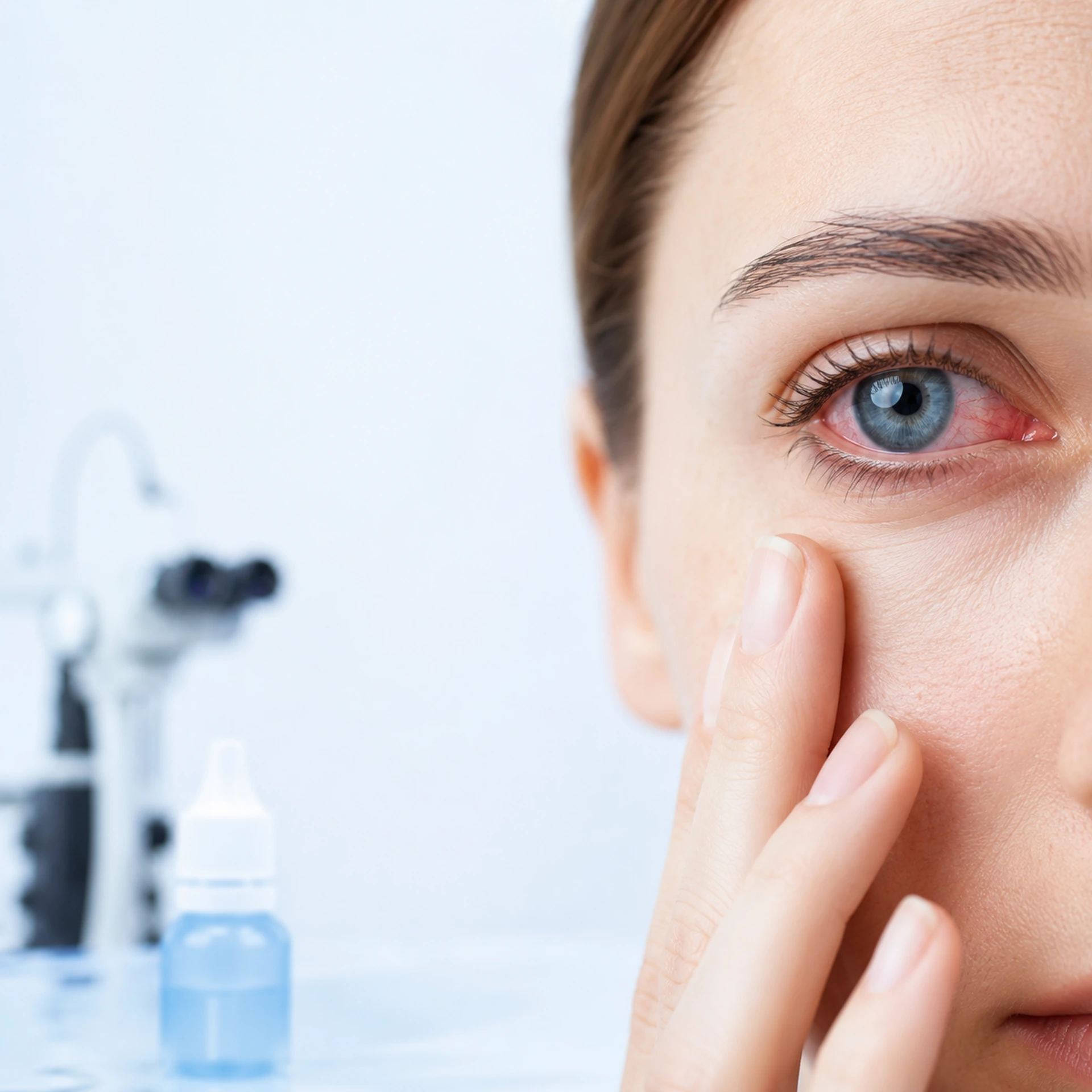
- Redness,
- Eye fatigue,
- Light sensitivity,
- Discomfort with contact lenses,
- Difficulty during reading or screen use,
- Blurred vision that temporarily improves after blinking,
- Excessive watering.
It may seem contradictory for a dry eye to water. Irritation of the eye surface can trigger reflex production of watery tears, but these tears do not always provide a stable, high-quality lubricating film.
Can computer and phone use make dry eye worse?
Yes, particularly during long, uninterrupted screen sessions. People tend to blink less often and may blink incompletely while concentrating on a screen. This allows tears to evaporate more quickly.
Helpful measures can include:
- Taking regular breaks,
- Making a conscious effort to blink fully,
- Positioning the screen slightly below eye level,
- Preventing air conditioning or fans from blowing directly toward the eyes,
- Avoiding an excessively dry room.
Symptoms that do not improve with changes in screen habits should be assessed for other causes.
What are the main causes of dry eye?
Dry eye generally develops through two main mechanisms: reduced tear production and excessive tear evaporation. Many people have a mixture of both.
Age-related changes
Tear production and the ocular surface change with age, which is one reason dry eye becomes more common later in life.
Meibomian gland dysfunction
Meibomian glands along the eyelid margin produce the oily layer of tears. If these glands do not release enough healthy oil, tears evaporate more quickly. Crusting at the eyelid margin and blepharitis may occur at the same time.
Contact lens use
Contact lenses affect the behavior of the tear film. Long wearing times, an unsuitable lens, or underlying ocular-surface disease may increase dryness symptoms.
Environmental factors
Air conditioning, heating, wind, low humidity, cigarette smoke, air pollution, and prolonged screen use can increase evaporation.
Medicines and systemic disease
Some antihistamines, antidepressants, and other medicines may contribute to dry eye. Rheumatologic conditions such as Sjögren syndrome, hormonal changes, and some dermatologic diseases can also affect the tear system.
Prescription medicines should not be stopped without medical advice merely because they are suspected of causing dryness.
How is dry eye diagnosed?
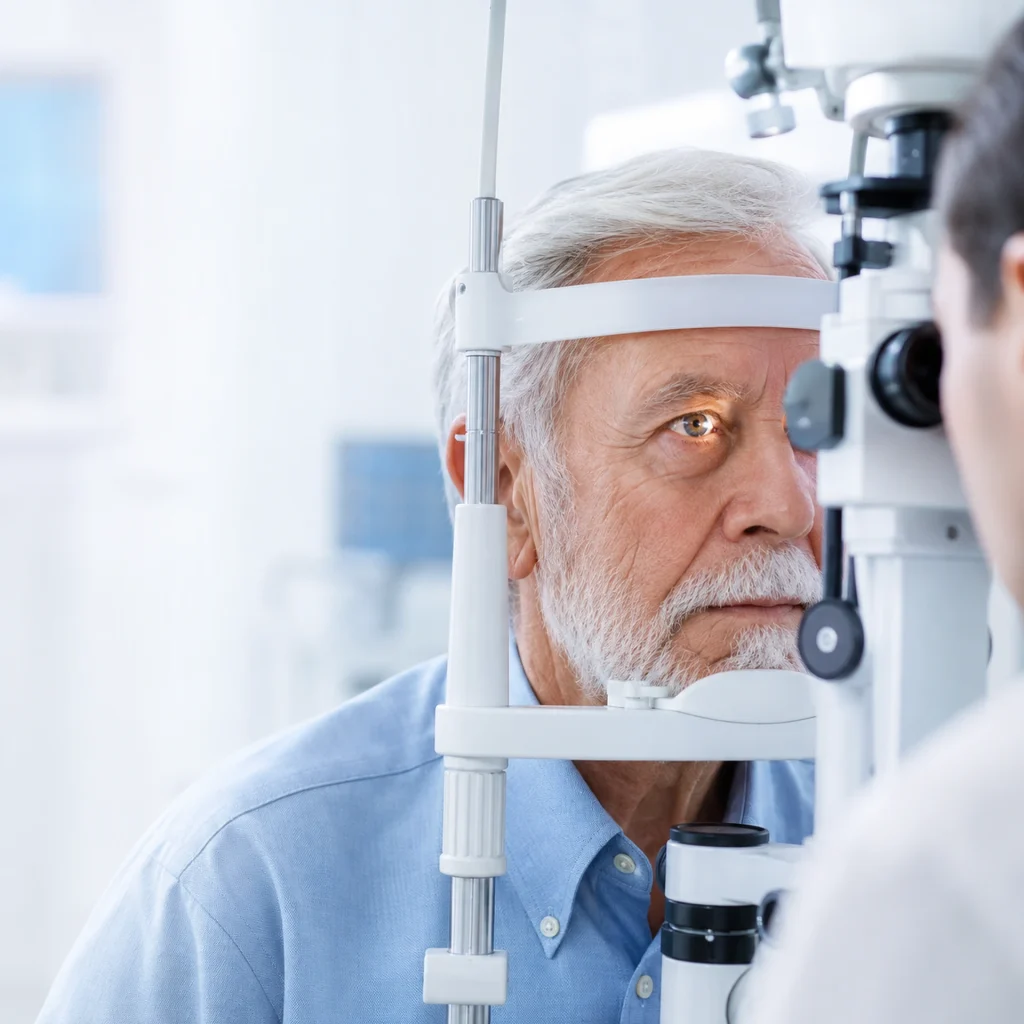
An ophthalmologist asks about the duration of symptoms, work and screen habits, contact lens use, medicines, and known health conditions. During a slit-lamp examination, the eyelids, lash line, cornea, and conjunctiva are assessed.
Depending on the case, tests may include:
- Tear break-up time,
- Dyes that highlight damage on the cornea and conjunctiva,
- Tear-volume tests such as the Schirmer test,
- Assessment of the meibomian glands,
- Tear osmolarity or inflammatory marker testing.
No single test explains every type of dry eye, so results are interpreted together.
Are all artificial tears the same?
No. Products vary in whether they contain preservatives, how thick they are, whether they include lipid components, and which lubricating molecules they use.
Preservatives can irritate the eye surface when drops are needed very frequently. Preservative-free products may therefore be preferred in people who require long-term or frequent use. Product choice should be matched to the type of dry eye.
How is dry eye treated?
Treatment is usually stepped according to the cause and severity.
Environmental measures
Screen breaks, reducing direct airflow, maintaining comfortable humidity, and avoiding smoke are basic measures.
Tear supplements
Artificial tears and lubricating gels may reduce symptoms.
Eyelid care
If meibomian gland dysfunction or blepharitis is present, warm compresses and lid hygiene may be recommended.
Prescription eye drops
In inflammatory dry eye, medicines such as cyclosporine or other prescription treatments may be considered. They are not appropriate for every patient.
Punctal plugs
In selected patients, small plugs can be placed in the tear-drainage openings to keep natural tears on the eye surface for longer.
What should contact lens users know?
If dryness becomes worse with lenses, the lens type, wearing time, cleaning solution, and ocular surface should all be reviewed. Sleeping in lenses, exceeding the recommended replacement schedule, and poor hygiene increase the risk of infection.
Continuing to wear contact lenses in a red, painful, light-sensitive eye is not appropriate. These symptoms can indicate corneal infection or another condition that requires prompt assessment.
Which symptoms are not typical of simple dry eye?
Dry eye usually causes mild to moderate burning and stinging. Seek prompt eye assessment if there is:
- Sudden loss of vision,
- Severe eye pain,
- Marked light sensitivity,
- Eye trauma,
- Chemical exposure to the eye,
- Intense redness and pain in a contact lens user.
These findings can indicate a more serious condition.
Conclusion
Dry eye can be a chronic ocular-surface condition that affects both visual quality and everyday comfort. Rather than relying on random redness-relief drops, the type and cause of the dryness should be identified. Persistent symptoms, contact lens intolerance, or changes in vision justify an ophthalmology assessment.
Frequently asked questions
Can dry eye cause blurred vision?
Yes. An unstable tear film can cause fluctuating blur, and brief improvement after blinking is common.
Can dry eye cause headaches?
Eye-surface discomfort and screen-related strain may occur with headaches, but headaches have many other causes.
Can dry eye go away completely?
It depends on the cause. Some cases are temporary, while others require long-term management.
Does drinking more water cure dry eye?
Adequate hydration is important for general health, but it is not a stand-alone treatment for dry eye disease.
Does dry eye require surgery?
Most people with dry eye do not need surgery. Treatment generally involves drops, environmental changes, and measures directed at the underlying cause.
Is it harmful to use artificial tears continuously?
The formulation and frequency matter. Needing drops very frequently can be a reason to have the condition reassessed.